Personal Training vs Training Alone: Which Is Better?
Introduction
One of the most common questions people ask when starting their fitness journey is:
Is it better to train alone or hire a personal trainer?
Both approaches can improve fitness, strength, and overall health. However, the results people achieve often depend on their level of knowledge, discipline, and training structure.
Understanding the differences between personal training and training alone helps individuals choose the approach that best supports their goals.
What Is Training Alone?
Training alone means exercising without direct supervision from a professional coach.
Many people follow:
• workouts found online
• training apps
• gym routines shared on social media
• self-created workout plans
For experienced gym members, this can sometimes work well. However, beginners often struggle with structure, technique, and long-term progression.
What Is Personal Training?
Personal training involves working with a qualified coach who designs structured programs and supervises workouts.
A personal trainer helps clients with:
• personalised training programs
• proper exercise technique
• structured strength progression
• accountability and motivation
• long-term fitness planning
The goal of personal training is to create a clear and efficient path toward measurable results.
Professional coaching environments also provide structured systems designed to support long-term progress in strength, body composition, and overall fitness.
zack_fitness_personal_trainer_d…
Advantages of Training Alone
Training alone offers several benefits, especially for individuals who already understand exercise programming.
Flexibility
Training alone allows complete control over schedule and workout structure.
People can train whenever they want without coordinating with a trainer.
Lower Cost
One of the main reasons people train alone is cost.
Gym memberships are significantly cheaper than personal training sessions.
Independence
Some individuals enjoy the freedom of creating their own routines and experimenting with different training styles.
For experienced athletes, self-directed training can be effective.
Challenges of Training Alone
Despite its advantages, training alone also presents several challenges.
Lack of Structure
Many people perform random exercises without a clear progression strategy.
Without structured programming, progress often slows or stops.
Technique Mistakes
Incorrect exercise technique can reduce effectiveness and increase the risk of injury.
Without professional guidance, many individuals unknowingly perform exercises incorrectly.
Lack of Accountability
Training motivation can fluctuate.
Without scheduled sessions or external accountability, many people skip workouts or train inconsistently.
Advantages of Personal
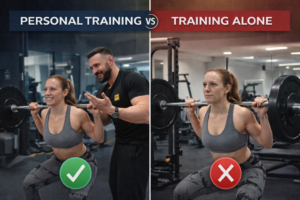
Training
Working with a personal trainer offers several key benefits.
Structured Training Programs
Personal trainers design programs based on:
• fitness level
• body composition
• specific goals
• lifestyle and schedule
This ensures every workout contributes to measurable progress.
Faster Progress
With professional guidance, clients often improve faster because their training is optimized.
Personal trainers help apply principles such as:
• progressive overload
• exercise variation
• structured recovery
Improved Technique and Safety
Correct exercise form improves both performance and safety.
A personal trainer provides real-time feedback to ensure exercises are performed correctly.
Accountability and Consistency
Scheduled training sessions help maintain consistency.
Clients are far more likely to train regularly when they have a coach guiding their progress.
Which Option Produces Better Results?
For beginners and busy professionals, personal training usually produces better results.
A structured program, professional guidance, and accountability significantly increase the likelihood of long-term progress.
However, experienced athletes who understand training programming may achieve good results training alone.
The key factor in either approach is consistency and progressive improvement over time.
Who Should Consider Personal Training?
Personal training is especially valuable for people who:
• are new to the gym
• want faster fat loss results
• want to build muscle efficiently
• struggle with consistency
• want professional guidance and accountability
Many individuals find that working with a coach helps them develop sustainable habits and long-term discipline.
Conclusion
Both personal training and training alone can improve health and fitness.
However, personal training provides structure, guidance, and accountability that significantly increase the chances of long-term success.
For individuals who want efficient workouts, faster results, and professional support, working with a personal trainer can be a valuable investment in their health and performance.
Author
Claudiu Ionuț Zaharia
Founder of Zack Fitness – Personal Trainer in London
With over 10 years of experience coaching clients and helping individuals achieve body transformations, his training philosophy focuses on discipline, strategy, and consistency as the foundation of long-term results.
FaQ
Is it better to train alone or with a personal trainer?
Training with a personal trainer usually produces faster results because programs are structured, technique is corrected, and accountability improves consistency.
Do beginners need a personal trainer?
Many beginners benefit from personal training because it helps them learn proper technique and follow structured training plans.
Can you get results training alone?
Yes, but it requires knowledge of exercise programming, discipline, and consistent training.
Why do people hire personal trainers?
People hire personal trainers for expert guidance, structured programs, accountability, and faster progress toward fitness goals.