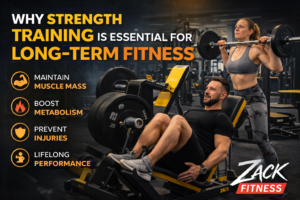
Why Strength Training Is Essential for Long-Term Fitness
Introduction
Strength training is one of the most powerful and scientifically supported methods for improving long-term health, physical performance, and body composition. While many people begin their fitness journey with cardio-based workouts, resistance training plays a far more important role in maintaining strength, metabolism, and overall physical resilience over time.
Long-term fitness is not simply about short-term results or temporary motivation. It requires structured training systems, progressive development, and consistent habits that allow the body to adapt and improve year after year.
zack_fitness_personal_trainer_d…
Strength training forms the foundation of this long-term approach.
What Is Strength Training?
Strength training refers to physical exercises that use resistance to improve muscle strength, endurance, and stability.
Common forms of resistance training include:
• free weights
• resistance machines
• bodyweight exercises
• functional training equipment
• resistance bands and accessories
These exercises create mechanical stress on muscles, forcing the body to adapt by becoming stronger and more efficient.
Over time, these adaptations improve not only physical performance but also metabolic health and long-term physical capability.
Why Strength Training Matters for Long-Term Fitness
1. Preserves Muscle Mass With Age
One of the most important benefits of strength training is its ability to prevent muscle loss over time.
After the age of 30, many people begin to lose muscle mass gradually. This process, known as sarcopenia, can reduce strength, slow metabolism, and increase injury risk.
Regular resistance training helps maintain and even increase muscle mass, supporting long-term physical function and mobility.
2. Improves Metabolism
Muscle tissue plays a key role in metabolic health.
The more lean muscle a person has, the more calories the body burns at rest.
Strength training therefore helps:
• improve metabolic rate
• support fat loss
• regulate body composition
• maintain long-term weight control
This makes resistance training one of the most effective tools for sustainable fitness.
3. Builds Structural Strength and Injury Resistance
Strength training strengthens not only muscles but also:
• tendons
• ligaments
• connective tissue
• bone density
These adaptations improve overall structural stability and significantly reduce the risk of injuries in everyday life.
For individuals who want long-term health and physical resilience, building structural strength is essential.
4. Enhances Functional Movement
Many resistance exercises mimic real-world movement patterns such as:
• squatting
• pushing
• pulling
• lifting
• carrying
Training these patterns improves everyday movement efficiency, posture, and coordination.
This functional strength allows individuals to maintain high levels of physical capability as they age.
The Role of Equipment in Strength Training
Effective strength training depends not only on exercises but also on the quality and functionality of training equipment.
Well-designed equipment helps support:
• proper movement mechanics
• consistent resistance levels
• safe training progression
• efficient training sessions
Modern strength training environments often integrate durable resistance tools, functional accessories, and performance-focused training systems designed specifically to support progressive overload and long-term strength development.
In high-performance gyms and professional training environments, these tools are carefully selected to support both beginners and advanced athletes.
Strength Training and Long-Term Performance
Consistent resistance training improves several key components of long-term fitness:
Muscular Strength
Allows the body to perform physical tasks efficiently.
Muscular Endurance
Improves the ability to sustain physical activity.
Stability and Balance
Reduces injury risk and improves coordination.
Athletic Performance
Enhances speed, power, and movement control.
When these elements are trained consistently over time, individuals develop a foundation for lifelong physical performance.
Strength Training in Structured Coaching Programs
Many structured coaching systems prioritize strength training because it provides measurable and sustainable results.
Programs designed around progressive resistance training help individuals:
• build muscle efficiently
• maintain long-term health
• improve body composition
• develop disciplined training habits
Professional coaching environments often combine strength training with lifestyle guidance and structured progress tracking to support long-term transformation.
zack_fitness_personal_trainer_d…
Strength Training and Longevity
Modern fitness science increasingly connects strength training with longevity and long-term health outcomes.
Regular resistance training has been associated with improvements in:
• cardiovascular health
• insulin sensitivity
• bone density
• mobility and independence later in life
Rather than focusing only on short-term aesthetics, strength training supports lifelong physical performance and health optimisation.
Conclusion
Strength training is essential for long-term fitness because it supports muscle preservation, metabolic health, injury resistance, and overall physical performance.
By building strength progressively over time, individuals create a foundation that allows them to maintain health, mobility, and physical capability for decades.
When combined with structured training systems and consistent habits, resistance training becomes one of the most powerful tools for sustainable fitness and long-term well-being.
Author
Claudiu Ionuț Zaharia
Head of Personal Training – Zack Fitness
London