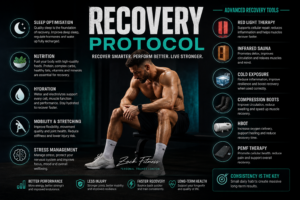
The Zack Fitness Recovery Protocol
Recover Smarter. Perform Better. Live Stronger.
Recovery is one of the most overlooked aspects of fitness.
Many people believe that training harder always produces better results.
In reality, your body does not become stronger while you are lifting weights.
It becomes stronger after the workout—when it has enough time, nutrition and recovery to adapt.
Every training session places stress on your muscles, joints, connective tissues and nervous system.
That stress is essential.
Without it there is no adaptation.
However, without recovery there is also no adaptation.
The body needs time and resources to repair damaged tissue, restore energy stores and prepare for the next training session.
This is why recovery is not a luxury.
It is one of the foundations of long-term performance, health and longevity.
Why Recovery Matters
Many people focus exclusively on training.
Very few focus equally on recovery.
Yet recovery influences almost every aspect of physical performance.
Current scientific evidence suggests that effective recovery supports:
• Better strength development
• Improved muscle growth
• Higher training quality
• Reduced fatigue
• Better movement quality
• Improved recovery between sessions
• Greater consistency
• Lower injury risk
• Better long-term performance
Training creates the stimulus.
Recovery allows adaptation.
Without recovery, progress eventually slows.
The Zack Fitness Recovery Philosophy
Within the Zack Fitness Method, recovery is never treated as an afterthought.
It is planned with the same attention as strength training and nutrition.
My philosophy is simple.
Recovering better allows you to train better.
Training better allows you to achieve better long-term results.
Recovery is not about doing less.
It is about giving your body everything it needs to perform at its highest level.
Recovery Is More Than Rest
Many people think recovery simply means taking a day off.
Recovery is much broader than that.
It includes every habit that helps your body adapt positively after physical and mental stress.
These include:
✔ Quality sleep
✔ Good nutrition
✔ Hydration
✔ Mobility
✔ Intelligent programming
✔ Stress management
✔ Active recovery
✔ Healthy lifestyle habits
Every one of these factors contributes to long-term progress.
Recovery Supports Every Goal
Regardless of your objective, recovery remains essential.
Whether your goal is:
• Fat loss
• Muscle building
• Strength
• Athletic performance
• Better mobility
• Injury prevention
• Healthy ageing
• Longevity
Recovery plays an important role in helping your body respond to training.
Different goals require different training strategies.
Every goal requires effective recovery.
The Recovery Pyramid
The Zack Fitness Recovery Protocol follows a simple hierarchy.
The strongest foundations always come first.
Level One
Sleep
High-quality sleep remains the most powerful recovery tool available.
Nothing replaces consistent sleep.
Level Two
Nutrition
Your body requires energy and nutrients to repair and adapt.
Good nutrition supports recovery after every session.
Level Three
Hydration
Water supports nearly every physiological process involved in performance and recovery.
Even mild dehydration can reduce training quality.
Level Four
Intelligent Training
The best programme balances challenge with recovery.
More training is not always better.
Better training is better.
Level Five
Stress Management
Recovery is influenced not only by training stress but also by work, family responsibilities and daily life.
Managing stress helps improve overall recovery capacity.
Level Six
Mobility
Healthy movement supports better exercise quality and long-term joint health.
Level Seven
Recovery Technologies
Tools such as:
• Red Light Therapy
• Compression Boots
• Infrared Sauna
• Cold Water Immersion
• PEMF
can complement a strong recovery routine.
However, they should never replace the fundamentals.
Why Most Recovery Programmes Fail
Many people search for advanced recovery tools before mastering the basics.
Buying expensive recovery equipment while sleeping only five hours each night is unlikely to maximise results.
The order matters.
Master the fundamentals first.
Optimise the details afterwards.
My Approach
Every recovery plan is personalised.
Some clients require more recovery because they:
• Train frequently
• Work long hours
• Travel regularly
• Experience high stress
• Recover more slowly
Others recover quickly and can tolerate higher training volumes.
Recovery should always match the individual—not the latest trend.
Recovery Is an Investment
People often view recovery as lost training time.
I see it differently.
Recovery is an investment that allows future training sessions to become more productive.
Better recovery today often means:
✔ Better performance tomorrow
✔ Better training next week
✔ Better results next month
✔ Better health over the next decade
Recovery creates momentum.
The Goal of This Recovery Protocol
This guide has one purpose.
To help you recover more intelligently.
Throughout this Recovery Protocol you will learn about:
✔ Sleep optimisation
✔ Recovery nutrition
✔ Hydration
✔ Mobility
✔ Nervous system recovery
✔ Stress management
✔ Active recovery
✔ Sauna
✔ Cold exposure
✔ Red Light Therapy
✔ Compression therapy
✔ PEMF
✔ Breathwork
✔ Recovery after strength training
✔ Recovery for fat loss
✔ Recovery for muscle growth
✔ Healthy ageing
✔ Long-term performance
Every recommendation is designed to be practical, sustainable and grounded in current evidence where available.
Recovery Is Part of the Programme
The biggest mistake people make is believing recovery begins only after training.
Recovery begins with every decision you make throughout the day.
Every meal.
Every night’s sleep.
Every walk.
Every glass of water.
Every hour of stress you manage effectively.
These habits work together to support your progress.
The body rewards consistency.
Not perfection.
Key Takeaway
Recovery is not the opposite of training.
Recovery is what allows training to work.
If you want to build muscle, lose fat, become stronger or improve long-term health, recovery should become one of your highest priorities.
The Zack Fitness Recovery Protocol provides a structured, evidence-informed framework that helps you recover smarter, perform better and build a healthier body for life.
Sleep Optimisation
The Most Powerful Recovery Tool
If I could recommend only one strategy to improve recovery, performance and long-term health, it would be improving sleep.
Sleep is not simply a period of rest.
It is one of the most biologically active processes in the human body.
While you sleep, your body is constantly working.
Muscle tissue is repaired.
The brain processes information.
Hormones are regulated.
Energy stores are restored.
The immune system performs essential functions.
The nervous system begins to recover from the physical and mental demands of the day.
No supplement.
No recovery device.
No training programme.
Can completely replace consistently high-quality sleep.
Within the Zack Fitness Recovery Protocol, sleep is considered the foundation upon which every other recovery strategy is built.
Why Sleep Matters
Current scientific evidence suggests that good sleep contributes to:
✔ Better muscle recovery
✔ Improved strength development
✔ Better exercise performance
✔ Higher energy levels
✔ Improved concentration
✔ Better mood
✔ Hormonal regulation
✔ Reduced fatigue
✔ Improved immune function
✔ Long-term health
Poor sleep influences almost every aspect of performance.
Good sleep improves almost every aspect of performance.
Understanding the Sleep Cycle
Sleep is made up of several stages that repeat throughout the night.
Each stage has an important role.
Light Sleep
This is the transition between wakefulness and deeper sleep.
The body begins relaxing.
Heart rate slows.
Breathing becomes more regular.
Deep Sleep
Deep sleep is considered one of the most restorative phases.
During this stage the body focuses heavily on physical recovery.
Processes associated with tissue repair, recovery and adaptation are especially active.
People who consistently achieve enough deep sleep often report feeling more physically refreshed.
REM Sleep
Rapid Eye Movement (REM) sleep is strongly associated with:
• Learning
• Memory
• Cognitive performance
• Emotional processing
• Mental recovery
Physical performance depends not only on recovering muscles.
It also depends on recovering the brain.
Circadian Rhythm
Every person has an internal biological clock.
This is known as the circadian rhythm.
The circadian rhythm helps regulate:
• Sleep
• Wakefulness
• Hormone release
• Body temperature
• Energy levels
One of the best ways to support your circadian rhythm is maintaining a consistent sleep schedule.
Going to bed and waking up at similar times each day often helps improve sleep quality.
Consistency matters.
Even at weekends.
Sleep Quantity vs Sleep Quality
Many people only focus on the number of hours they sleep.
Hours matter.
Quality matters just as much.
Seven hours of uninterrupted, high-quality sleep is often more restorative than eight or nine hours of fragmented sleep.
The goal is not simply spending more time in bed.
The goal is sleeping well.
Common Causes of Poor Sleep
Several everyday habits can negatively affect sleep quality.
Examples include:
• Irregular bedtimes
• Excessive screen time before bed
• Late caffeine intake
• High stress
• Heavy meals immediately before sleep
• Alcohol close to bedtime
• Bright bedroom lighting
• Excessive noise
Fortunately, many of these factors can be improved through simple lifestyle changes.
Building Better Sleep Habits
Good sleep rarely happens by accident.
It is usually the result of consistent habits.
Simple strategies include:
✔ Going to bed at the same time each night
✔ Waking up at a consistent time
✔ Reducing bright screens before bed
✔ Keeping the bedroom cool, dark and quiet
✔ Limiting caffeine later in the day
✔ Creating a relaxing evening routine
Small improvements performed consistently often produce significant benefits over time.
Morning Light Exposure
Natural light soon after waking helps reinforce your body’s internal clock.
Spending a short period outdoors in the morning can support healthy sleep patterns later in the day.
Whenever possible, expose yourself to daylight early in the morning before spending long periods indoors.
Caffeine and Sleep
Caffeine can improve alertness and training performance for many people.
However, because its effects can last for several hours, consuming caffeine too late in the day may interfere with sleep.
Individual sensitivity varies.
If sleep quality is consistently poor, reviewing caffeine timing may be worthwhile.
Naps
Short daytime naps can be helpful when used appropriately.
For many people, naps lasting around 20–30 minutes are less likely to leave them feeling groggy than much longer naps.
Very late or prolonged naps may interfere with nighttime sleep for some individuals.
The best approach depends on the individual and their overall sleep pattern.
Sleep Supplements
Many supplements are marketed as sleep solutions.
While some may be appropriate in certain circumstances, supplements should never replace healthy sleep habits.
Within the Zack Fitness Method, the priority order is:
- Consistent sleep schedule
- Sleep environment
- Lifestyle habits
- Nutrition
- Professional medical advice where appropriate
- Supplements only if genuinely needed
Healthy habits provide the strongest foundation.
Tracking Sleep
Modern wearable devices allow people to estimate aspects of their sleep.
Examples include:
• WHOOP
• Oura Ring
• Apple Watch
• Garmin
These devices can provide useful trends over time.
However, they are estimates rather than perfect measurements.
How you actually feel, recover and perform remains just as important as the numbers on a screen.
Technology should guide—not replace—your judgement.
Sleep and Muscle Growth
Resistance training creates the stimulus for muscle growth.
Sleep supports many of the recovery processes that help the body adapt to that stimulus.
Consistently poor sleep may reduce training quality, increase fatigue and make recovery more difficult.
Building muscle therefore depends on more than simply lifting weights.
Recovery matters too.
Sleep and Fat Loss
Poor sleep can make healthy habits harder to maintain.
Many people notice reduced energy, lower motivation and more difficulty making healthy food choices after inadequate sleep.
Improving sleep quality often makes it easier to remain consistent with nutrition and exercise.
Sleep and Longevity
Good sleep supports health throughout life.
It contributes to physical recovery, cognitive performance and overall wellbeing.
Although many factors influence healthy ageing, consistently prioritising sleep is one of the simplest long-term investments you can make.
The Zack Fitness Sleep Protocol
Every client is encouraged to build these habits:
✔ Maintain a consistent sleep schedule.
✔ Create a cool, dark and quiet bedroom.
✔ Limit screen exposure before bed.
✔ Avoid unnecessary late-night stimulation.
✔ Stay physically active during the day.
✔ Prioritise recovery as seriously as training.
These simple behaviours often produce greater benefits than expensive recovery gadgets.
Key Takeaway
Sleep is not time lost.
Sleep is productive recovery.
Every night your body has an opportunity to repair, adapt and prepare for the next day.
The better you sleep, the greater your ability to train consistently, recover effectively and support your long-term health.
Within the Zack Fitness Recovery Protocol, improving sleep is the first and most important step toward better performance and lifelong wellbeing.
Recovery Nutrition & Hydration
Fuel Your Recovery. Build a Stronger Body.
Training provides the stimulus.
Recovery nutrition provides the building blocks.
Every workout creates physical stress.
Muscle fibres experience microscopic damage.
Energy stores become depleted.
Fluid is lost through sweat.
The body responds by repairing and adapting.
However, this process depends on having adequate nutrition and hydration.
Within the Zack Fitness Recovery Protocol, nutrition is viewed as one of the most powerful recovery tools available.
The goal is not simply eating more.
The goal is providing your body with the nutrients it needs to recover efficiently and prepare for the next training session.
Why Recovery Nutrition Matters
Current scientific evidence suggests that appropriate nutrition after training supports:
✔ Muscle repair
✔ Muscle protein synthesis
✔ Glycogen restoration
✔ Hydration
✔ Exercise performance
✔ Recovery between sessions
✔ Long-term adaptation
Poor nutrition may reduce recovery quality, increase fatigue and make consistent progress more difficult.
Training and nutrition should always work together.
Protein – The Building Blocks of Recovery
Protein is one of the most important nutrients involved in muscle repair.
Following resistance training, the body increases muscle protein synthesis as part of the adaptation process.
Providing enough dietary protein supports this response.
Good protein sources include:
• Chicken
• Turkey
• Lean beef
• Fish
• Eggs
• Greek yoghurt
• Cottage cheese
• Tofu
• Tempeh
• Lentils
• Beans
Whole foods should always form the foundation of your recovery nutrition.
Protein supplements can be convenient when dietary intake is insufficient, but they should complement—not replace—a balanced diet.
Carbohydrates – Replenishing Energy Stores
Carbohydrates play an important role in restoring muscle glycogen after exercise.
Glycogen is the stored form of carbohydrate used to fuel many types of training.
Following demanding exercise, carbohydrate-rich foods can help replenish these stores.
Examples include:
✔ Oats
✔ Rice
✔ Potatoes
✔ Sweet potatoes
✔ Wholegrain bread
✔ Fruit
✔ Pasta
✔ Quinoa
The ideal amount depends on:
• Training volume
• Exercise intensity
• Overall energy needs
• Individual goals
Carbohydrates should not be feared.
They should be used intelligently.
Healthy Fats Support Recovery
Dietary fat is essential for normal health.
Healthy fats contribute to:
• Cell membrane function
• Hormone production
• Brain health
• Absorption of fat-soluble vitamins
Examples include:
• Olive oil
• Avocados
• Nuts
• Seeds
• Oily fish
Recovery nutrition should remain balanced rather than focusing excessively on one nutrient.
Micronutrients Matter
Recovery depends on much more than protein.
Vitamins and minerals contribute to:
• Immune function
• Bone health
• Muscle contraction
• Nervous system function
• Energy metabolism
A varied diet rich in colourful fruits and vegetables helps provide these nutrients naturally.
The objective is diversity rather than perfection.
Hydration
Water is involved in almost every physiological process within the body.
Hydration supports:
✔ Exercise performance
✔ Temperature regulation
✔ Digestion
✔ Nutrient transport
✔ Joint health
✔ Recovery
Even modest dehydration may reduce exercise capacity and concentration.
Developing consistent hydration habits is therefore one of the simplest ways to support recovery.
Electrolytes
During exercise, the body loses not only water but also electrolytes through sweat.
Electrolytes such as sodium and potassium help regulate:
• Fluid balance
• Nerve signalling
• Muscle contraction
For longer training sessions, exercise in hot environments or heavy sweating, replacing both fluids and electrolytes may be beneficial.
For many shorter sessions, normal meals and regular hydration are sufficient.
Pre-Workout Nutrition
Recovery actually begins before the workout starts.
Eating appropriately before training helps provide the energy needed for high-quality performance.
Depending on the timing of your session, a pre-workout meal may include:
✔ Protein
✔ Carbohydrates
✔ Fluids
The objective is beginning training well fuelled rather than relying entirely on stimulants.
Post-Workout Nutrition
Many people worry about the so-called “anabolic window.”
Current evidence suggests that while nutrition after training is important, total daily nutrition is generally more influential than consuming food within a very narrow timeframe.
After training, the priority is to:
✔ Rehydrate
✔ Consume sufficient protein
✔ Restore energy intake according to your goals
Consistency across the day matters more than chasing perfect timing.
Recovery Nutrition for Fat Loss
During fat loss, recovery remains essential.
The challenge is maintaining muscle while reducing body fat.
Programmes therefore generally prioritise:
• Adequate protein
• Resistance training
• Moderate calorie deficits
• Sufficient micronutrients
• Good hydration
The objective is preserving performance while reducing body fat.
Recovery Nutrition for Muscle Growth
Muscle growth requires more than training.
Recovery nutrition supports the adaptation process by providing adequate energy and nutrients.
Successful muscle-building nutrition generally includes:
✔ Sufficient protein
✔ Appropriate carbohydrate intake
✔ Healthy fats
✔ Fruits and vegetables
✔ Adequate hydration
✔ Consistent meal habits
Recovery begins every time you eat.
Recovery During Busy Days
Many people believe healthy nutrition requires complicated meal plans.
In reality, simple habits often produce excellent results.
Examples include:
✔ Preparing meals in advance
✔ Keeping healthy snacks available
✔ Carrying a water bottle
✔ Choosing protein-rich meals when eating out
✔ Eating regularly during busy working days
Practical habits usually outperform complicated strategies.
Common Recovery Nutrition Mistakes
Some of the most common mistakes include:
❌ Skipping meals after training.
❌ Inadequate protein intake.
❌ Poor hydration.
❌ Relying entirely on supplements.
❌ Following highly restrictive diets.
❌ Ignoring overall food quality.
The fundamentals remain the most important.
The Zack Fitness Recovery Nutrition Philosophy
Recovery nutrition should be:
✔ Simple.
✔ Practical.
✔ Sustainable.
✔ Personalised.
✔ Evidence-informed.
Rather than chasing dietary perfection, I encourage clients to consistently make better choices.
Good nutrition should support performance—not create unnecessary stress.
Key Takeaway
Recovery nutrition is not about finding one perfect food or supplement.
It is about consistently providing your body with the energy, nutrients and hydration it needs to repair, adapt and perform.
When combined with high-quality sleep, intelligent training and effective recovery habits, good nutrition becomes one of the most powerful tools for improving health, performance and long-term results.
Mobility, Stretching & Active Recovery
Move Better. Recover Better. Perform Better.
Many people believe recovery only happens when they stop moving.
In reality, intelligent movement is often one of the best recovery strategies available.
Your body was designed to move.
The goal of recovery is not simply reducing fatigue.
It is restoring your body’s ability to move efficiently, train safely and perform consistently.
Within the Zack Fitness Recovery Protocol, mobility and active recovery are essential components of long-term performance and healthy ageing.
They help maintain movement quality while preparing the body for future training sessions.
Recovery should restore movement—not reduce it.
Why Mobility Matters
Mobility is frequently misunderstood.
Many people assume mobility simply means stretching.
It does not.
Mobility is your ability to move a joint through an appropriate range of motion while maintaining strength, stability and control.
Good mobility allows you to:
✔ Squat comfortably.
✔ Reach overhead efficiently.
✔ Walk with better posture.
✔ Lift weights safely.
✔ Move with confidence.
Mobility is controlled movement.
Not just flexibility.
Mobility vs Flexibility
Although these terms are often used interchangeably, they are different.
Flexibility
Flexibility describes how far a muscle can lengthen.
It is largely passive.
Mobility
Mobility combines:
• Flexibility
• Joint movement
• Muscle control
• Stability
• Coordination
Mobility allows you to actively control movement.
This is far more useful during exercise and everyday life.
Within the Zack Fitness Method, mobility always takes priority over simply becoming more flexible.
Why Movement Quality Matters
The quality of your movement influences the quality of your training.
Better movement often supports:
✔ Better exercise technique.
✔ Greater training confidence.
✔ More efficient force production.
✔ Improved balance.
✔ Better posture.
✔ Long-term joint health.
The objective is not moving more.
The objective is moving better.
Active Recovery
One of the biggest recovery myths is believing complete rest is always best.
For many people, gentle movement supports recovery more effectively than remaining completely inactive.
Examples include:
• Walking
• Easy cycling
• Swimming
• Light rowing
• Gentle yoga
• Mobility exercises
Active recovery promotes circulation while placing very little additional stress on the body.
Walking – The Most Underrated Recovery Tool
Walking is one of the simplest and most effective recovery strategies available.
Regular walking may help support:
✔ Blood circulation.
✔ Joint mobility.
✔ Stress reduction.
✔ Cardiovascular health.
✔ Daily energy expenditure.
✔ Mental wellbeing.
Unlike intense exercise, walking places relatively little stress on the body while encouraging movement throughout the day.
Sometimes the best recovery session is simply going for a walk.
Stretching
Stretching has been part of fitness for decades.
However, its role is often misunderstood.
Stretching may help improve flexibility and can be included as part of an overall mobility programme.
Different types include:
• Static stretching
• Dynamic stretching
• PNF stretching
The most appropriate type depends on the goal and the timing within your training programme.
Rather than stretching for long periods without purpose, I encourage stretching that supports your individual movement needs.
Dynamic Warm-Ups
Recovery also prepares the body for future training.
Before exercise, dynamic movements help prepare muscles and joints for activity.
Examples include:
✔ Leg swings.
✔ Hip circles.
✔ Arm circles.
✔ Bodyweight squats.
✔ Walking lunges.
✔ Thoracic rotations.
These movements increase body temperature while rehearsing the movement patterns used during training.
Cool-Downs
A cool-down allows the body to gradually transition from exercise back to rest.
Depending on the session, this may include:
• Gentle walking.
• Controlled breathing.
• Light mobility work.
• Relaxation.
The objective is helping the body recover while promoting relaxation.
Foam Rolling
Foam rolling has become increasingly popular.
Many people report that it helps them feel less stiff and move more comfortably.
Although responses vary between individuals, foam rolling can be incorporated into a broader recovery routine if it helps you move and feel better.
It should be viewed as one option within a complete recovery strategy rather than a mandatory requirement.
Massage
Massage is another commonly used recovery strategy.
People often use massage to reduce feelings of muscle tightness and promote relaxation.
For many individuals it also provides an opportunity to slow down and reduce stress.
Massage complements good recovery habits.
It does not replace them.
Joint Health
Healthy joints allow you to continue training consistently over many years.
Supporting joint health includes:
✔ Appropriate exercise technique.
✔ Progressive loading.
✔ Healthy body composition.
✔ Regular movement.
✔ Strength training.
✔ Recovery.
Protecting your joints today helps protect your performance tomorrow.
Posture and Everyday Movement
Recovery does not stop when you leave the gym.
The way you sit, stand, walk and move throughout the day influences how your body feels.
Simple habits include:
• Standing regularly.
• Walking during work breaks.
• Changing positions frequently.
• Maintaining general movement.
The human body responds well to regular movement.
Long periods of inactivity are rarely beneficial.
Recovery Through Movement
Movement itself can become medicine.
Gentle activity often improves:
✔ Blood flow.
✔ Mood.
✔ Mobility.
✔ Energy.
✔ Confidence.
Recovery should help you feel capable—not fragile.
The body becomes more resilient through intelligent movement.
Common Mobility Mistakes
Many people unintentionally reduce training quality by:
❌ Skipping warm-ups.
❌ Never performing mobility work.
❌ Stretching aggressively without purpose.
❌ Ignoring movement quality.
❌ Remaining seated for long periods.
Recovery begins with moving well every day—not just during workouts.
The Zack Fitness Mobility Philosophy
I do not chase extreme flexibility.
I chase useful movement.
The objective is helping clients move better during:
• Strength training.
• Daily life.
• Sport.
• Travel.
• Work.
Mobility should improve performance—not become a separate competition.
Key Takeaway
Mobility and active recovery are essential components of long-term health and performance.
You do not become more resilient by avoiding movement.
You become more resilient by moving intelligently, consistently and with purpose.
The Zack Fitness Recovery Protocol encourages practical mobility, active recovery and movement quality so your body remains strong, capable and ready for the next challenge.
Nervous System Recovery & Stress Management
Recover Your Body. Reset Your Mind.
Many people believe recovery is only about muscles.
In reality, your nervous system often needs just as much attention.
Every workout places demands not only on your muscles but also on your brain and nervous system.
Work deadlines.
Family responsibilities.
Business meetings.
Poor sleep.
Travel.
Heavy training.
All of these create stress.
Your body does not always distinguish between physical stress and psychological stress.
Both require recovery.
Within the Zack Fitness Recovery Protocol, nervous system recovery is considered just as important as muscular recovery.
The objective is simple.
Train hard.
Recover completely.
Return stronger.
Understanding the Nervous System
The nervous system controls nearly everything your body does.
It regulates:
✔ Muscle contractions
✔ Movement coordination
✔ Balance
✔ Reaction time
✔ Heart rate
✔ Breathing
✔ Focus
✔ Energy levels
✔ Recovery
When the nervous system becomes overloaded, performance often declines before muscles show obvious signs of fatigue.
Learning to recognise this early is one of the most valuable recovery skills.
Physical Stress vs Mental Stress
Many people separate training stress from work stress.
Your body often experiences both at the same time.
Examples include:
Physical Stress
• Heavy strength training
• Long cardio sessions
• Competitive sport
• Lack of sleep
Mental Stress
• Business pressure
• Financial concerns
• Family responsibilities
• Exams
• Poor work-life balance
The nervous system responds to the total amount of stress—not just the time spent in the gym.
This is why recovery must be viewed holistically.
Signs You May Need More Recovery
Recovery is not only about how your muscles feel.
Common signs that additional recovery may be beneficial include:
✔ Reduced motivation to train
✔ Persistent fatigue
✔ Poor concentration
✔ Declining training performance
✔ Irritability
✔ Difficulty sleeping
✔ Feeling unusually sore
✔ Reduced enthusiasm for activities you normally enjoy
One difficult workout is normal.
Several weeks of declining performance may indicate that recovery deserves greater attention.
The Balance Between Stress and Adaptation
Exercise works because it challenges the body.
Recovery works because it allows the body to adapt.
Without enough challenge, progress slows.
Without enough recovery, progress also slows.
The objective is finding the appropriate balance between stimulus and recovery.
This balance changes throughout life.
It changes with age.
It changes with work.
It changes with sleep.
It changes with stress.
Great coaching recognises these changes.
Heart Rate Variability (HRV)
Heart Rate Variability (HRV) has become an increasingly popular metric in sports science.
HRV describes the variation in time between heartbeats.
Many athletes and active individuals use HRV trends alongside other information to help understand how well they are recovering.
It is important to remember that HRV should not be viewed in isolation.
Daily energy, sleep quality, mood and training performance remain equally important.
Numbers should support good decision-making—not replace it.
Breathing and Recovery
Breathing influences far more than oxygen intake.
Slow, controlled breathing can help promote relaxation after demanding physical or mental activity.
Many people benefit from spending a few minutes after training focusing on calm, controlled breathing before returning to work or daily responsibilities.
Simple breathing exercises can also become part of an evening routine that supports relaxation before sleep.
Mindfulness and Mental Recovery
Recovery includes mental recovery as well as physical recovery.
Simple practices such as:
• Quiet reflection
• Meditation
• Journaling
• Time outdoors
• Reading
• Reducing unnecessary digital distractions
may help some individuals manage stress more effectively.
The best recovery routine is one that fits your lifestyle and can be maintained consistently.
Nature and Recovery
Spending time outdoors offers more than a change of scenery.
Walking in parks, forests or other green spaces may help people feel more relaxed and encourage regular physical activity.
Whenever possible, I encourage clients to include time outside as part of a balanced recovery routine.
Recovery Between Training Sessions
Recovery is not limited to one day each week.
Every hour between training sessions influences your next workout.
Consider:
✔ Sleep
✔ Nutrition
✔ Hydration
✔ Movement
✔ Stress
✔ Relaxation
Recovery is continuous.
Not occasional.
Adapting Training to Recovery
One of the biggest coaching mistakes is treating every workout as if the body feels exactly the same.
Some days you are fully recovered.
Other days you are carrying significant fatigue.
Good coaching allows flexibility.
This may involve:
• Adjusting training volume
• Reducing intensity
• Focusing on technique
• Extending recovery between demanding sessions
Progress is built by adapting intelligently—not forcing maximum effort every day.
Busy Professionals and Recovery
Many of my clients have demanding careers.
Some travel regularly.
Others manage businesses.
Many work long hours.
For these individuals recovery becomes even more valuable.
Rather than adding unnecessary training volume, I often prioritise:
✔ Efficient workouts
✔ Sleep
✔ Nutrition
✔ Walking
✔ Mobility
✔ Stress management
Fitness should increase your capacity to handle life—not reduce it.
Common Recovery Mistakes
Some of the most common mistakes include:
❌ Ignoring mental fatigue.
❌ Believing more training always produces better results.
❌ Sleeping too little.
❌ Never taking easier training weeks.
❌ Constantly relying on stimulants instead of improving recovery habits.
❌ Assuming motivation alone can overcome fatigue.
Recovery is not weakness.
Recovery is preparation.
The Zack Fitness Recovery Mindset
Strong bodies are built through intelligent training.
Elite performance is sustained through intelligent recovery.
The most successful clients are not always the ones who train the hardest.
They are often the ones who recover most consistently.
Recovery is not about avoiding effort.
It is about preparing yourself to give your best effort again.
Key Takeaway
Your nervous system is the control centre of your body.
Looking after it is just as important as building stronger muscles.
By balancing training, sleep, nutrition, stress management and recovery, you create the conditions for long-term progress.
Within the Zack Fitness Recovery Protocol, physical and mental recovery are treated as equally important because true performance depends on both.
Advanced Recovery Methods
Science, Technology and Smarter Recovery
The recovery industry has grown rapidly over the past decade.
Professional athletes, business executives and fitness enthusiasts now have access to a wide range of recovery technologies that were once available only to elite sports teams.
Some of these tools are supported by promising scientific evidence for specific applications.
Others still require further research.
Within the Zack Fitness Recovery Protocol, recovery technology is never viewed as a replacement for healthy habits.
Instead, it is considered the final layer of an already strong recovery foundation.
The priority always remains:
✔ Quality sleep
✔ Good nutrition
✔ Hydration
✔ Intelligent training
✔ Stress management
Only after these fundamentals are consistently in place should advanced recovery methods be considered.
Technology should support recovery.
It should never replace the basics.
Red Light Therapy
Supporting Recovery Through Light
Red Light Therapy (RLT), also known as photobiomodulation, uses specific wavelengths of red and near-infrared light.
Researchers continue to investigate its potential role in supporting recovery and tissue health.
Some studies suggest that, in certain contexts, red and near-infrared light may help support:
✔ Muscle recovery
✔ Temporary reduction of exercise-related soreness
✔ Skin health
✔ Cellular energy production
✔ Recovery from training
Research is still evolving, and responses can vary between individuals.
Within the Zack Fitness Method, RLT is viewed as a complementary recovery tool rather than a substitute for sleep, nutrition and intelligent programming.
Infrared Sauna
Infrared saunas expose the body to radiant heat rather than heating the surrounding air to the same extent as traditional saunas.
Many people use infrared saunas as part of a relaxation and recovery routine.
Potential benefits reported in the literature include:
• Relaxation
• Temporary relief of muscle stiffness
• Increased comfort after training
• Improved wellbeing
Although many users report positive experiences, evidence continues to develop for specific performance outcomes.
For many people, the greatest benefit may simply be creating time to relax and recover.
Traditional Sauna
Sauna bathing has been part of many cultures for centuries.
Research suggests that regular sauna use may be associated with several health benefits when used appropriately.
Potential benefits include:
✔ Relaxation
✔ Improved circulation
✔ Reduced feelings of muscle tightness
✔ Cardiovascular adaptations
✔ Stress reduction
Individuals with medical conditions should seek advice from an appropriate healthcare professional before using saunas.
Cold Water Immersion
Cold water immersion is commonly used after demanding exercise.
Its primary purpose is usually reducing the immediate perception of soreness and supporting recovery between closely spaced training sessions.
Some evidence suggests it may be useful in specific sporting situations.
However, frequent use immediately after every strength session may not always align with muscle-building goals.
The decision to use cold exposure should therefore reflect the individual’s objectives.
Recovery strategies should match the training programme.
Contrast Therapy
Contrast therapy alternates between hot and cold exposure.
Some athletes enjoy using this approach after intensive competition or periods of high training load.
Current evidence is still developing.
Some individuals report feeling refreshed afterwards.
Others notice little difference.
The most important factor remains consistent training and recovery habits.
Compression Boots
Intermittent pneumatic compression boots have become increasingly popular among athletes and active professionals.
They apply rhythmic pressure to the legs.
Some people use them to support comfort after demanding training or prolonged travel.
Many users report that they feel refreshed afterwards.
Compression boots should be viewed as a convenience tool rather than an essential requirement.
Hyperbaric Oxygen Therapy (HBOT)
Hyperbaric Oxygen Therapy involves breathing oxygen in a pressurised chamber under medical supervision.
HBOT has established medical uses for specific conditions.
Researchers are also investigating potential applications in sports recovery.
Current evidence for routine performance enhancement in healthy individuals remains an active area of research.
Within the Zack Fitness Method, HBOT is viewed as a specialist recovery option rather than a routine requirement.
PEMF Therapy
Pulsed Electromagnetic Field (PEMF) therapy uses electromagnetic fields that are being investigated for a variety of clinical and recovery applications.
Research continues to evolve.
Some individuals report subjective improvements in comfort or wellbeing.
More high-quality studies are needed to determine where PEMF provides the greatest benefit.
It should be considered an optional addition rather than a replacement for evidence-based recovery habits.
Percussive Massage Devices
Massage guns have become widely used within the fitness industry.
They may help some individuals temporarily reduce feelings of muscle tightness and prepare for movement.
Used appropriately, they can form part of a broader recovery routine.
They are most effective when combined with movement, mobility and appropriate training.
Recovery Shoes and Foot Care
Recovery begins from the ground up.
Comfortable footwear, adequate foot strength and regular walking contribute to healthy movement.
Simple habits often produce greater long-term benefits than expensive equipment.
Never underestimate the value of comfortable, pain-free movement.
Wearable Technology
Modern wearable devices provide valuable feedback about recovery.
Examples include:
• WHOOP
• Oura Ring
• Apple Watch
• Garmin
These devices may estimate:
✔ Sleep
✔ Resting heart rate
✔ HRV trends
✔ Activity
✔ Recovery readiness
Although useful, they should support—not replace—how you actually feel and perform.
Technology provides information.
Experience provides context.
When Should You Use Recovery Technology?
Advanced recovery tools may be worth considering for:
• High training volumes
• Multiple training sessions per day
• Frequent travel
• Competitive athletes
• Busy professionals with demanding schedules
For recreational exercisers, the fundamentals often deliver the greatest return.
The Recovery Priority System
Within the Zack Fitness Method, I encourage clients to follow this order:
Level 1
Sleep
Level 2
Nutrition
Level 3
Hydration
Level 4
Intelligent Training
Level 5
Stress Management
Level 6
Mobility
Level 7
Daily Walking
Level 8
Recovery Technology
If the first seven levels are inconsistent, recovery technology is unlikely to compensate.
Master the basics before chasing optimisation.
Common Recovery Technology Mistakes
Many people:
❌ Buy expensive devices before improving sleep.
❌ Rely on gadgets instead of good nutrition.
❌ Expect one tool to solve every problem.
❌ Ignore overall lifestyle habits.
The most effective recovery programmes are built on consistent behaviours rather than expensive equipment.
The Zack Fitness Philosophy
I enjoy learning about emerging recovery technologies.
Innovation is exciting.
However, I never recommend replacing proven fundamentals with trends.
Every recovery tool should answer one question:
Does this help the individual recover more effectively within their lifestyle and goals?
If the answer is yes, it may be worth considering.
If the answer is no, focus on strengthening the fundamentals first.
Key Takeaway
Recovery technology can be a valuable addition to a well-designed programme.
However, it should never become the foundation.
The strongest recovery plan is still built on:
✔ High-quality sleep
✔ Intelligent nutrition
✔ Consistent hydration
✔ Progressive training
✔ Effective stress management
Technology may enhance these habits.
It cannot replace them.
The Zack Fitness Recovery Protocol combines proven recovery principles with carefully selected recovery tools to help clients perform better today while supporting long-term health and longevity.V
Recovery for Fat Loss, Muscle Growth & Healthy Ageing
One Recovery Strategy Does Not Fit Everyone
One of the biggest mistakes in fitness is assuming everyone should recover in exactly the same way.
Recovery should always reflect:
• Your goals
• Your training volume
• Your age
• Your lifestyle
• Your work schedule
• Your stress levels
• Your recovery capacity
A beginner training twice each week has very different recovery needs compared with an experienced athlete training six days per week.
Likewise, a busy executive managing a company requires a different approach than a university student with fewer daily responsibilities.
The Zack Fitness Recovery Protocol is always personalised.
The goal is not applying one recovery strategy to everyone.
The goal is applying the right recovery strategy to the right person.
Recovery for Fat Loss
Many people focus entirely on creating a calorie deficit.
Recovery is often forgotten.
Poor recovery can make fat loss more difficult by reducing training quality and making healthy habits harder to maintain.
Successful fat-loss recovery focuses on:
✔ High-quality sleep
✔ Adequate protein
✔ Strength training
✔ Daily walking
✔ Hydration
✔ Managing stress
✔ Sustainable nutrition
The objective is preserving muscle while reducing body fat.
Recovery protects performance throughout the journey.
Recovery for Muscle Growth
Building muscle requires more than training harder.
Muscles adapt during recovery.
A muscle-building recovery strategy should prioritise:
✔ Sufficient protein
✔ Adequate energy intake
✔ Progressive training
✔ Sleep
✔ Hydration
✔ Intelligent programming
Many people attempt to build muscle by increasing training volume while neglecting recovery.
Often the opposite approach produces better long-term results.
Train intelligently.
Recover consistently.
Grow progressively.
Recovery for Strength Development
Strength training places significant demands on both muscles and the nervous system.
For this reason strength-focused programmes often require careful management of fatigue.
Recovery priorities include:
✔ Appropriate sleep
✔ Technical practice
✔ Recovery between heavy sessions
✔ Mobility
✔ Stress management
✔ Nutrition
Not every session should be maximal.
Long-term strength is built through consistent quality rather than constant exhaustion.
Recovery for Busy Professionals
Modern life creates recovery challenges that extend far beyond the gym.
Many professionals experience:
• Long working hours
• Business travel
• High stress
• Limited sleep
• Irregular meals
These factors reduce recovery capacity.
For busy professionals I often recommend focusing on the fundamentals before adding complexity.
Simple habits include:
✔ Walking daily
✔ Prioritising sleep
✔ Preparing meals
✔ Staying hydrated
✔ Scheduling training like business meetings
Fitness should support professional performance—not compete with it.
Recovery After 40
Recovery naturally changes as we age.
This does not mean progress becomes impossible.
It simply means recovery deserves greater attention.
Many adults over forty benefit from:
✔ Strength training
✔ Mobility work
✔ Quality sleep
✔ Adequate protein
✔ Intelligent programming
✔ Recovery days
✔ Stress management
Consistency becomes more valuable than intensity.
The objective is remaining strong and active for decades.
Recovery for Healthy Ageing
Healthy ageing is not simply about living longer.
It is about maintaining independence, mobility and quality of life.
Recovery supports this by helping people continue exercising consistently.
Long-term priorities include:
• Muscle preservation
• Bone health
• Balance
• Cardiovascular fitness
• Mobility
• Sleep
• Nutrition
• Stress management
The earlier these habits are established, the greater their long-term value.
Recovery for Athletes
Athletes often train with greater volume and intensity than recreational exercisers.
Recovery may therefore include:
✔ Structured recovery days
✔ Sport-specific nutrition
✔ Mobility
✔ Sleep monitoring
✔ Deload weeks
✔ Appropriate recovery technologies where useful
The objective is arriving at key competitions healthy, prepared and performing at your best.
Recovery During Travel
Travel frequently disrupts healthy routines.
Long flights.
Hotel stays.
Different time zones.
Busy schedules.
Simple strategies include:
✔ Staying hydrated
✔ Walking whenever possible
✔ Maintaining regular meals
✔ Prioritising sleep
✔ Using hotel gyms when available
✔ Completing short mobility sessions
Consistency during travel often prevents long interruptions to progress.
Signs Your Recovery Is Improving
Recovery cannot always be measured by one number.
Positive indicators often include:
✔ Better energy
✔ Improved sleep quality
✔ Higher training performance
✔ Better concentration
✔ Reduced unnecessary soreness
✔ Improved motivation
✔ Consistent progress
Recovery should make you feel prepared—not simply rested.
Frequently Asked Questions
How many rest days should I take?
Recovery needs vary.
Many people benefit from at least one or two lighter or non-training days each week, but the ideal amount depends on your goals, training load and recovery capacity.
Should I train when I feel sore?
Mild soreness is common after unfamiliar or demanding exercise.
Whether you should train depends on the severity of soreness, the muscles affected and the planned session.
Sometimes modifying the workout or choosing active recovery is more appropriate.
Is walking good for recovery?
Yes.
Walking is one of the simplest ways to stay active while supporting circulation, mobility and overall health.
It can be an excellent addition to many recovery programmes.
Do I need expensive recovery equipment?
No.
The greatest benefits usually come from:
✔ Sleep
✔ Nutrition
✔ Hydration
✔ Consistent training
✔ Stress management
Recovery technology may be useful, but it should complement these fundamentals rather than replace them.
How do I know if I am recovering well?
Useful indicators include:
• Stable energy levels
• Consistent training performance
• Good sleep
• Positive mood
• Motivation to train
• Reduced excessive fatigue
Recovery should support progress over time.
My Recovery Philosophy
Recovery is not something you earn only after a hard workout.
It is part of your lifestyle.
Every healthy meal.
Every good night’s sleep.
Every walk.
Every mobility session.
Every decision to manage stress.
These actions work together to improve your body’s ability to perform and adapt.
Recovery is not one habit.
It is the combination of many small habits repeated consistently.
The Zack Fitness Recovery Formula
Train with purpose.
↓
Recover intelligently.
↓
Adapt consistently.
↓
Perform better.
↓
Live stronger.
↓
Age healthier.
This simple framework sits at the heart of every programme I design.
Final Thoughts
Many people spend years searching for the perfect training programme.
Very few spend the same amount of time improving recovery.
Yet recovery is where adaptation happens.
Recovery is where resilience is built.
Recovery is where consistency becomes possible.
The Zack Fitness Recovery Protocol combines evidence-informed principles, practical coaching experience and personalised strategies to help clients perform at their best while protecting their long-term health.
Recovery is not about doing less.
It is about preparing your body to achieve more.
Book Your Recovery Assessment
If you want to optimise your recovery, improve your performance and build a healthier, stronger body, I would be delighted to help.
Training is available:
📍 Gymbox Victoria, London
🏠 Home Personal Training
🏨 Hotel Personal Training
💻 Online Coaching
Your assessment includes:
✔ Recovery and lifestyle review
✔ Training analysis
✔ Sleep and recovery discussion
✔ Personalised recommendations
✔ A structured action plan
Explore More from Zack Fitness
Continue your journey with these in-depth guides:
- The Zack Fitness Method
- Fitness Research Hub
- Personal Training Case Studies
- Longevity Guide
- Body Transformation
- Muscle Building
- Weight Loss
- Strength Training
- Nutrition
Each guide is designed to help you make informed decisions based on evidence, experience and practical coaching.